
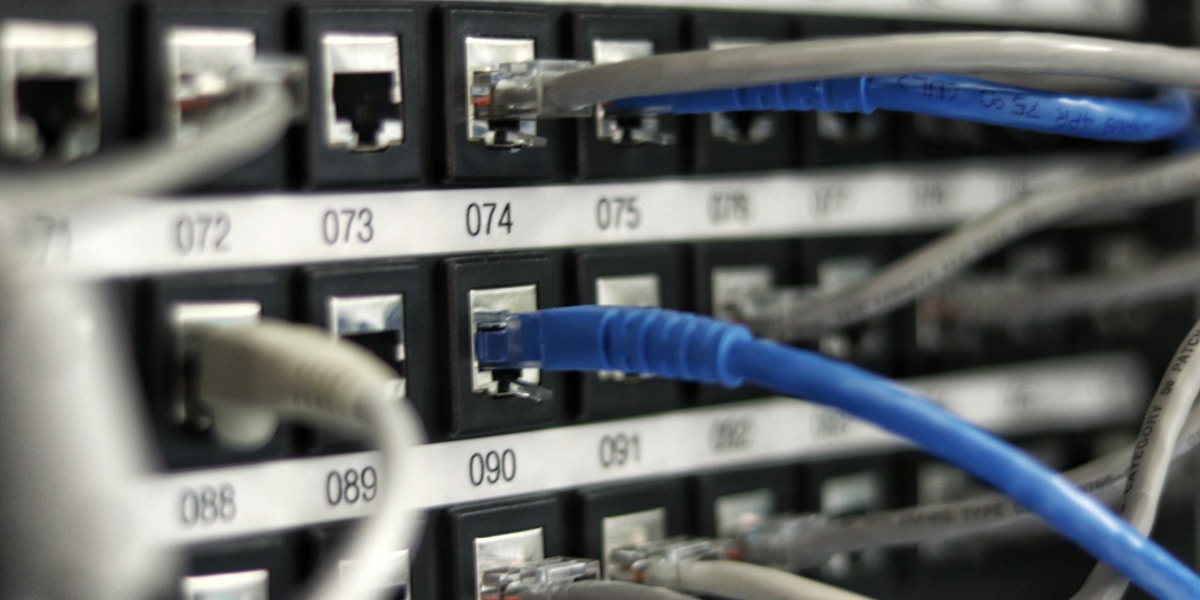
When a copper POTS line is retired, the replacement usually comes in one of three flavors: cellular LTE/5G, fiber-delivered analog service, or SIP over the building's Ethernet network. They are not interchangeable — picking the wrong one can leave a life-safety circuit non-compliant or saddle a building with unnecessary cost.
Side by side
| Factor | LTE / 5G | Fiber (analog over fiber) | Ethernet / SIP |
|---|---|---|---|
| Install time | 15 min | 30–120 days | 1 day if circuit exists |
| Survives building power outage | Yes (battery) | No (ONT dies) | No (switch dies) |
| Survives building internet outage | Yes | Yes | No |
| NFPA 72 / UL864 fire-panel compliant | Yes (with listed device) | Sometimes | Rarely |
| Typical monthly cost | $30–$60 / line | $80–$300 / line | $5–$20 / line |
| Best for | Fire, elevator, alarm, intercom | High-density office voice | Office phones, back-office fax |
When LTE is the right answer
For anything life-safety or monitored — fire panel, elevator, area-of-rescue, burglar alarm, gate phone — LTE-based POTS replacement is the default. It is the only option that keeps working when both grid power and building internet are out. See the POTS Box solution.
When fiber makes sense
Fiber-delivered analog is appropriate for dense office voice deployments where the carrier is sunsetting copper but still offers an analog-over-fiber product. It is rarely cost-effective for fewer than 10–15 lines per building.
When SIP over Ethernet makes sense
SIP works for general office voice and non-critical back-office lines (a fax machine that prints invoices, an unmonitored intercom). Do not put a monitored fire alarm or elevator phone on a building network — see common migration mistakes.
The hybrid that wins for most buildings
Most commercial buildings end up with two replacement technologies: LTE for everything life-safety, and SIP for office voice. Doing both with one provider keeps invoicing simple — that is why we partner with MSPs and agents to bundle both under one partner program.